
The perfect season’s echo
Greenbrier won its first four listed games, allowing only 14 points and shutting out Orlinda once and Bell once. The 37–6 Rogersville loss left the final file at 4–1, still giving the program ten wins in eleven listed games across 1938–39.
A hard season, a permanent identity
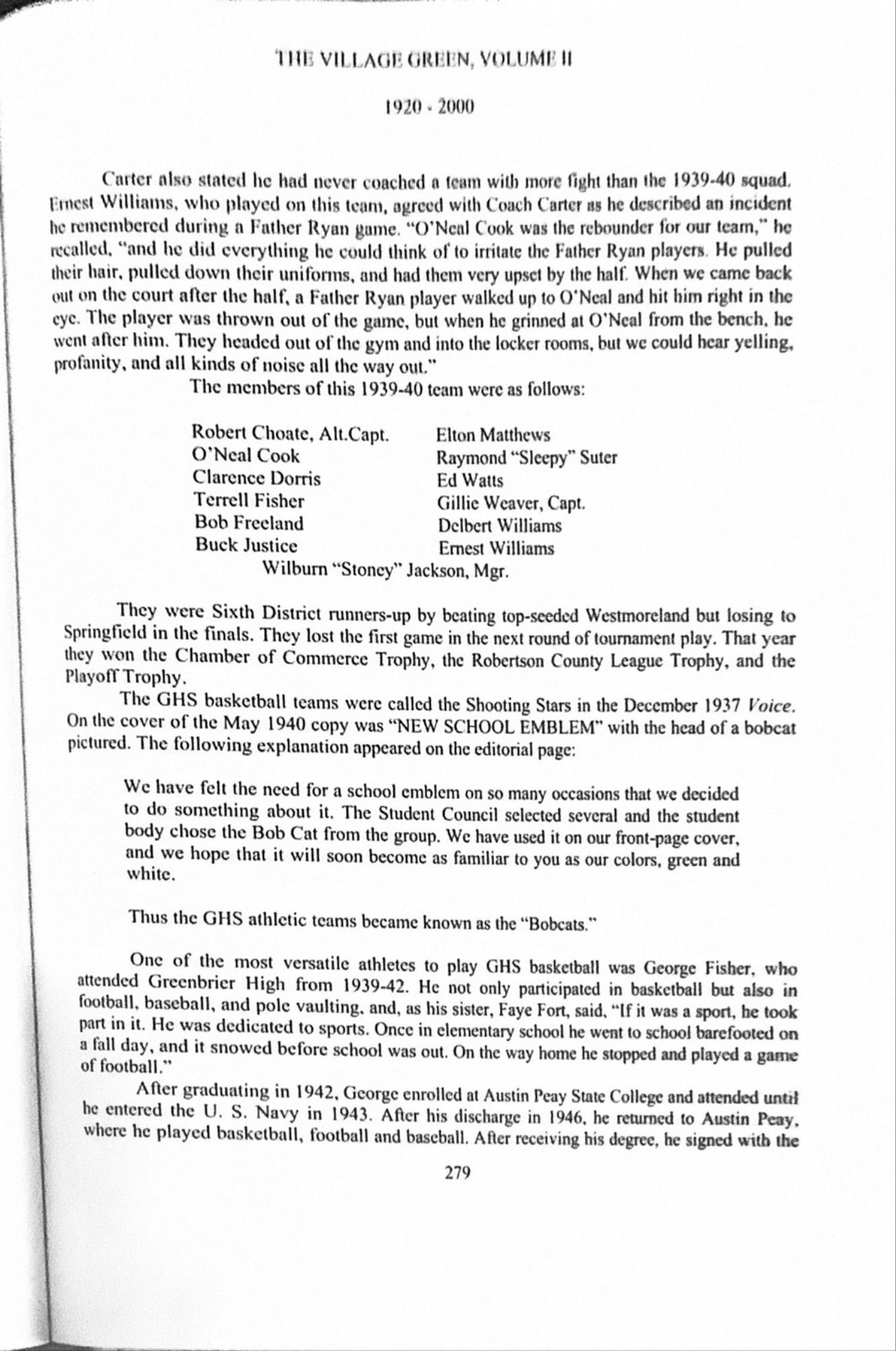
Work had begun in January on a new school plant, built with National Youth Administration labor and local support. In May, the student body chose Bobcat from emblems selected by the Student Council. The fall team went 1–9, yet the name chosen before the season became the year’s enduring athletic legacy.
The only win was 13–12 over Barren Plains. It arrived after seven losses and reversed an earlier 27–19 result against the same opponent.
County champions by the numbers
The master record calls Greenbrier Robertson County Association Champions. Six wins over five county communities totaled 195–27; three were shutouts. Coopertown alone beat Greenbrier, doing it twice and holding the Bobcats scoreless both times.
Average points in six wins
Average points allowed in six wins
Points in consecutive wins over Cedar Hill and Barren Plains
Combined score in two Coopertown losses
The record narrows as the war reaches school life
The two seasons contain thirteen opponent lines but only seven known outcomes. In 1942, Greenbrier tied Cross Plains and lost to Coopertown and Adams; three more entries remain unresolved. In 1943, a 12–0 Adams win followed three losses; additional entries again carry no result.
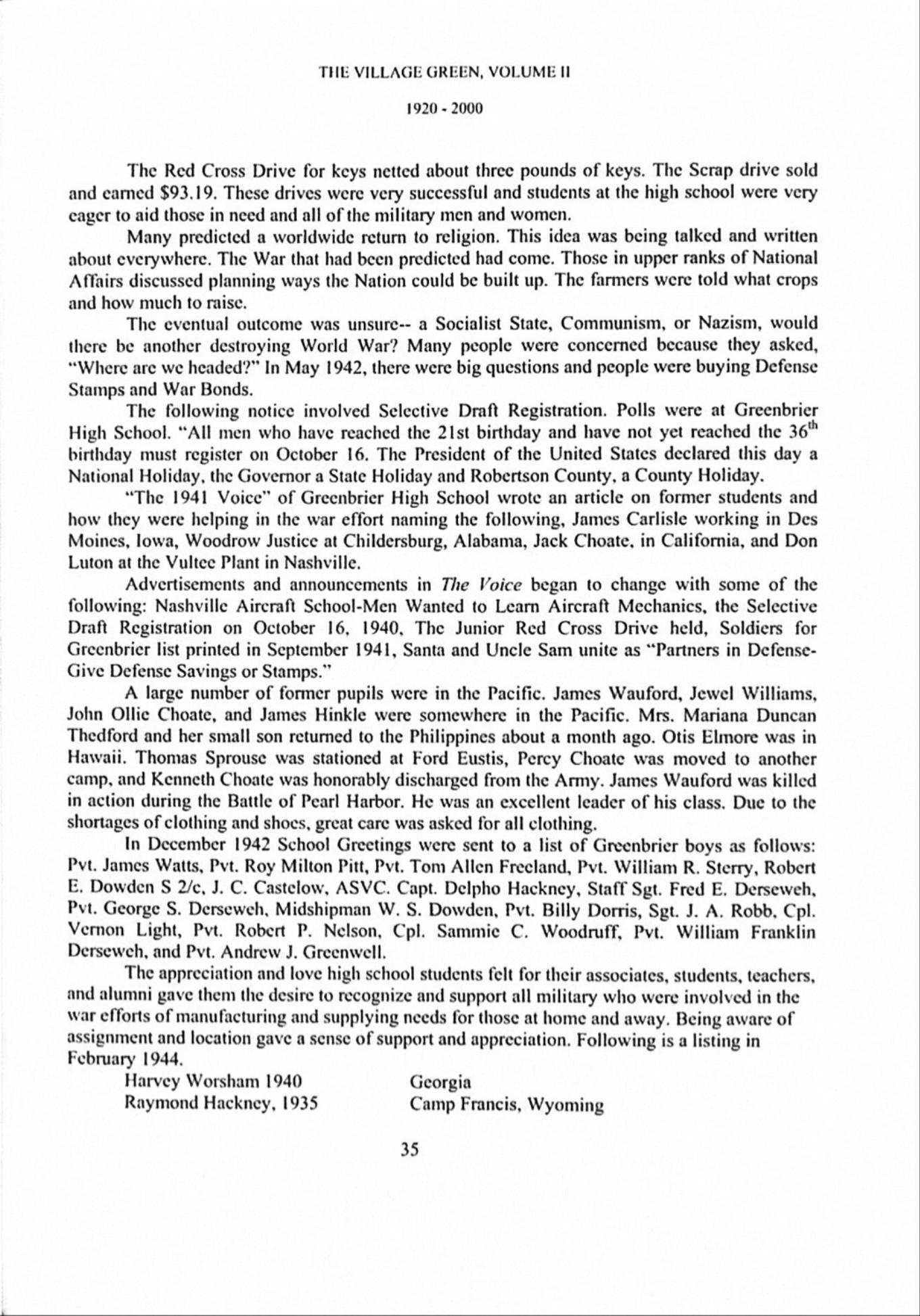
The Village Green places those football fragments inside a school mobilized for war: a county Victory Parade, key and scrap drives, Defense Stamps and War Bonds, draft registration at the high school and published messages to former students in service. James Wauford, a former pupil, was killed in action at Pearl Harbor.
Two explicit no-team years
The master list marks both football seasons “No Team- WWII.” That wording is stronger than a blank schedule and narrower than a claim that school athletics stopped. Football returned in 1946 under Jimmy Suter.
Sources: All-Time GHS Football Scores; The Village Green, pp. 34–35 and 279; Greenbrier Athletic Hall of Fame profiles for Joe Henry Carter, George Fisher and Jimmy Suter.