
A team again
The all-time score list explicitly marks 1944 and 1945 “No Team- WWII.” Its next football heading is 1946: four known wins under Jimmy Suter and an Adams line whose final still has not been recovered. The Hall of Fame’s Suter profile preserves a photograph of that first postwar team.
Suter builds the first postwar run
The next five seasons were uneven but revealing: three shutout wins in 1947; a one-win 1948; a 1949 split between four dominant wins and four heavy losses; a ten-game 1950 slate; then a 1951 recovery from 0–3 to a 3–1–1 finish. The known game rows across Suter’s six seasons total 19–20–2, plus the unresolved Adams line in 1946.
A new home on Highway 41 South
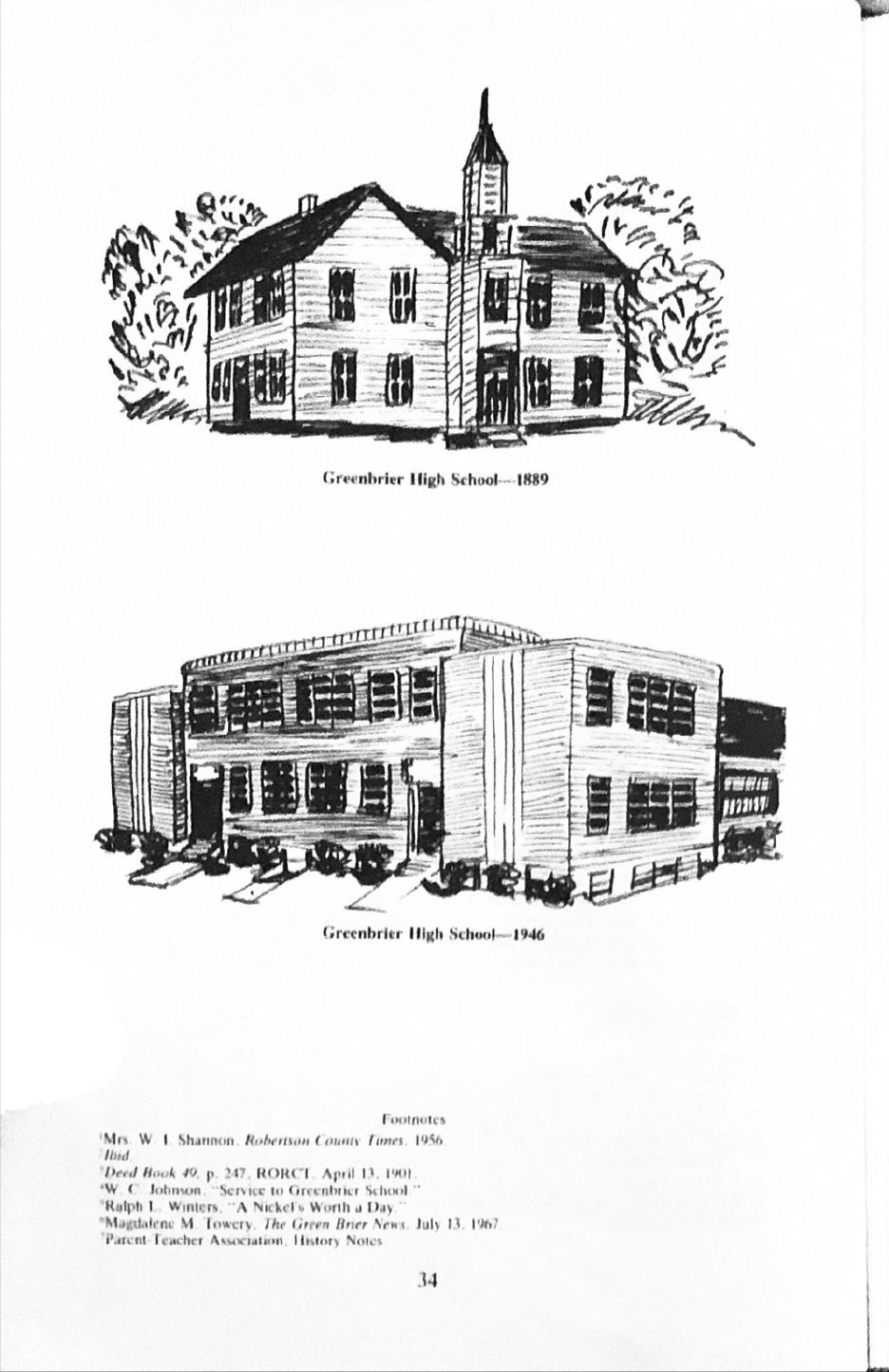
The Village Green says the high school moved in 1949 to a new 500-pupil building on Highway 41 South. The $200,000 school opened with Clarence Terry as principal, while the old brick building continued as the elementary school. The same local history places postwar Greenbrier amid returning servicemen, new GI homes and Greyhound bus connections to Nashville.
The one-year bridge
Hubert Smothers had been listed on Suter’s staff from 1949 through 1951. His single head-coaching season produced a striking 3–5 split: Greenbrier’s three wins were shutouts totaling 76–0, while the five losses totaled 6–131.
The Fletcher climb
Harold Fletcher’s records rise in a straight line: 4–5, 5–4, 10–0. The point margins climb with them, from plus-15 to plus-39 to plus-180. His teams totaled 459–225 across three seasons.
The decisive run began before the perfect year. Greenbrier won its last four listed games of 1954, then all ten in 1955: 14 consecutive listed victories. The final was a 25–6 Ashland City rematch marked “LCVC Playoff Game,” with Greenbrier labeled Lower Cumberland Valley Conference Champions.